Creative strategy that keeps
the testing pipeline full.
On Meta today, creative does much of the targeting: the idea and the opening seconds decide who sees an ad. The brands that grow keep shipping genuinely different ideas, not thirty versions of the same ad. A senior creative strategist builds the ideas from customer research; our Studio agent turns them into concepts and formats fast enough to launch every week.
Who it’s for: DTC and ecommerce brands with a media buyer (yours or ours) but nobody owning creative, or whose best ads are months old. The film and ads shown are from Studio’s run on a fictional demo brand; the people are AI-generated.
Is this you?
- Your best ads are months old and nothing new beats them
- You have a media buyer but nobody owns creative
- UGC comes back off-brief or the scripts are weak
- New ads look different to you but perform like the old ones
Why it usually goes wrong.
- Variations, not ideas. Meta can treat near-identical ads as one, so new colours and headlines on one template add little.
- No research behind the angles. Ideas come from the team’s taste, not customers’ words.
- Weak briefs. Creators get a product and a vibe, not a hook, a proof moment and an objection to handle.
- No memory. Tests aren’t tagged, so the team relearns the same lessons.
The creative testing loop.

Your senior creative strategist: Owns the angles, edits and signs off everything that goes live.
How the work runs.
Weekly
A launch batch: new concepts and new takes on winners, briefed to your buyer.
The pipeline never runs dry.Every two weeks
Learning review: which angles, personas and formats are winning, and why.
Decisions from evidence.Monthly
Concept bank refresh from reviews, support tickets and competitor ads.
New ideas, not recycled ones.Always
Learnings log, with every test tagged by angle, persona and format.
Wins compound over time.The method, point by point.
- Research from real customersYour reviews and competitors’, support tickets, post-purchase surveys, Reddit and forums, sales-call notes, search terms, and long-running competitor ads in the Meta Ad Library.
- An angle matrixOur starting framework: around five to eight reasons to buy, crossed with a few personas, awareness stage and format (talking-head UGC, demo, founder, comparison static, listicle, carousel). One angle per ad, so results are readable.
- Diversity over volume10–20 live ads per ad set, mixing formats, people, settings and first frames. Meta can treat near-identical ads as one, so variety matters more than count.
- Iterate with meaningAbout 70/30 new takes on proven concepts vs brand-new ideas (the split Dara Denney reports from Caraway’s ad system). New takes change the angle, person, format or first frame, not just the text.
- Hooks, tested properlySeveral opening hooks for each strong video, tested with Meta’s creative testing so near-identical versions aren’t merged, and diagnosed with hook rate and hold rate.
- Briefs creators can followPersona and pain, a scripted first three seconds, the proof moment, the objection to handle, the CTA, lines that must and mustn’t be said, and the specs (9:16, 4:5, raw footage).
- Claims you can stand behindEvery claim checked against what you can substantiate under the ASA’s CAP Code. No invented testimonials.
- Studio for volumeStudio drafts concepts, statics, carousels and scripts from your product photos; the strategist chooses and edits.
What we report.
- Creative hit rateshare of new concepts that become winners
- Hook rate3-second views ÷ impressions
- Hold rateviewers who stay past the hook
- Cost per sale by anglewhich reasons to buy actually sell
- Spend concentrationshare of spend on the top ads
- Creative ageso fatigue is caught early
The agent behind it.
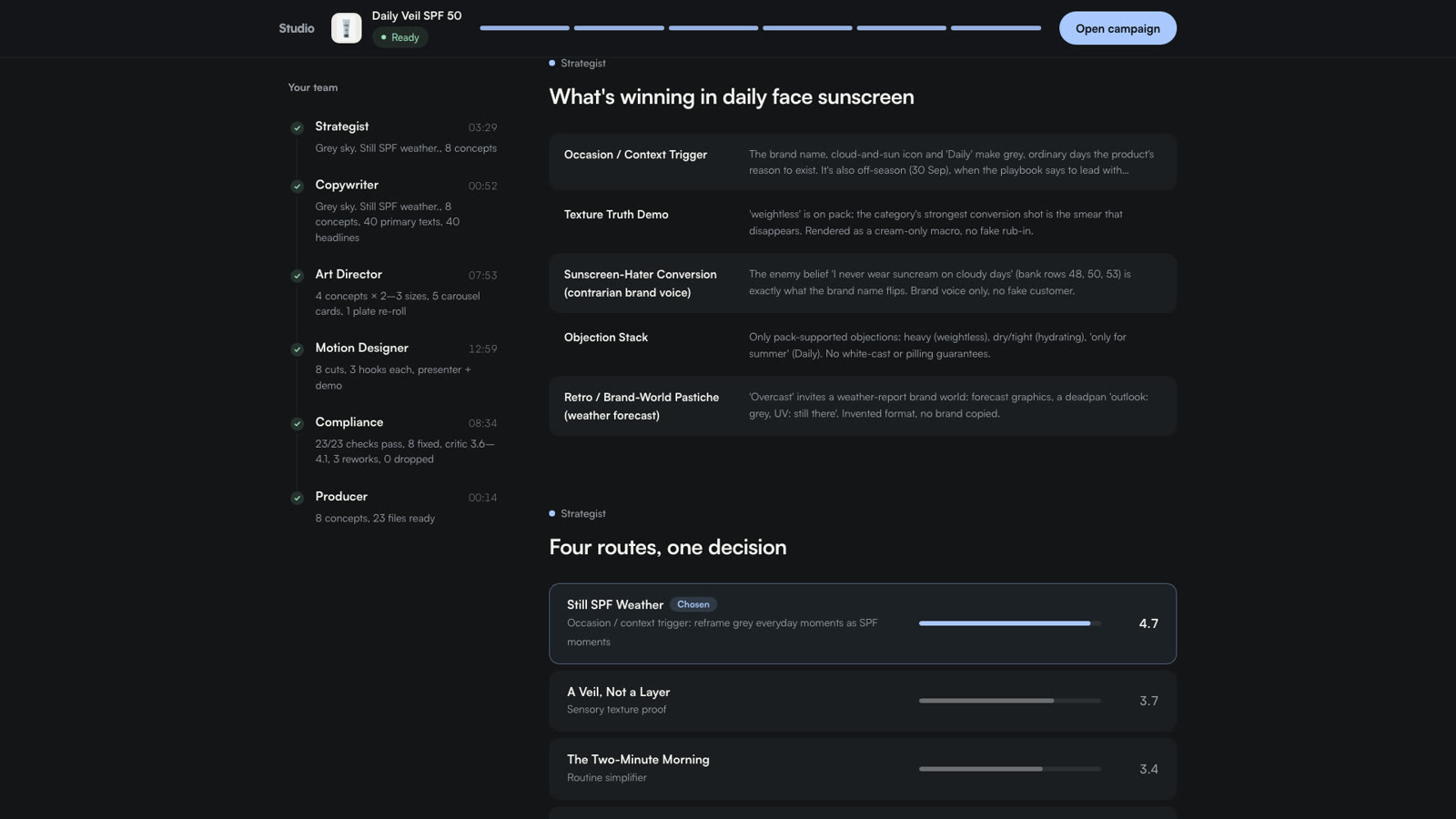
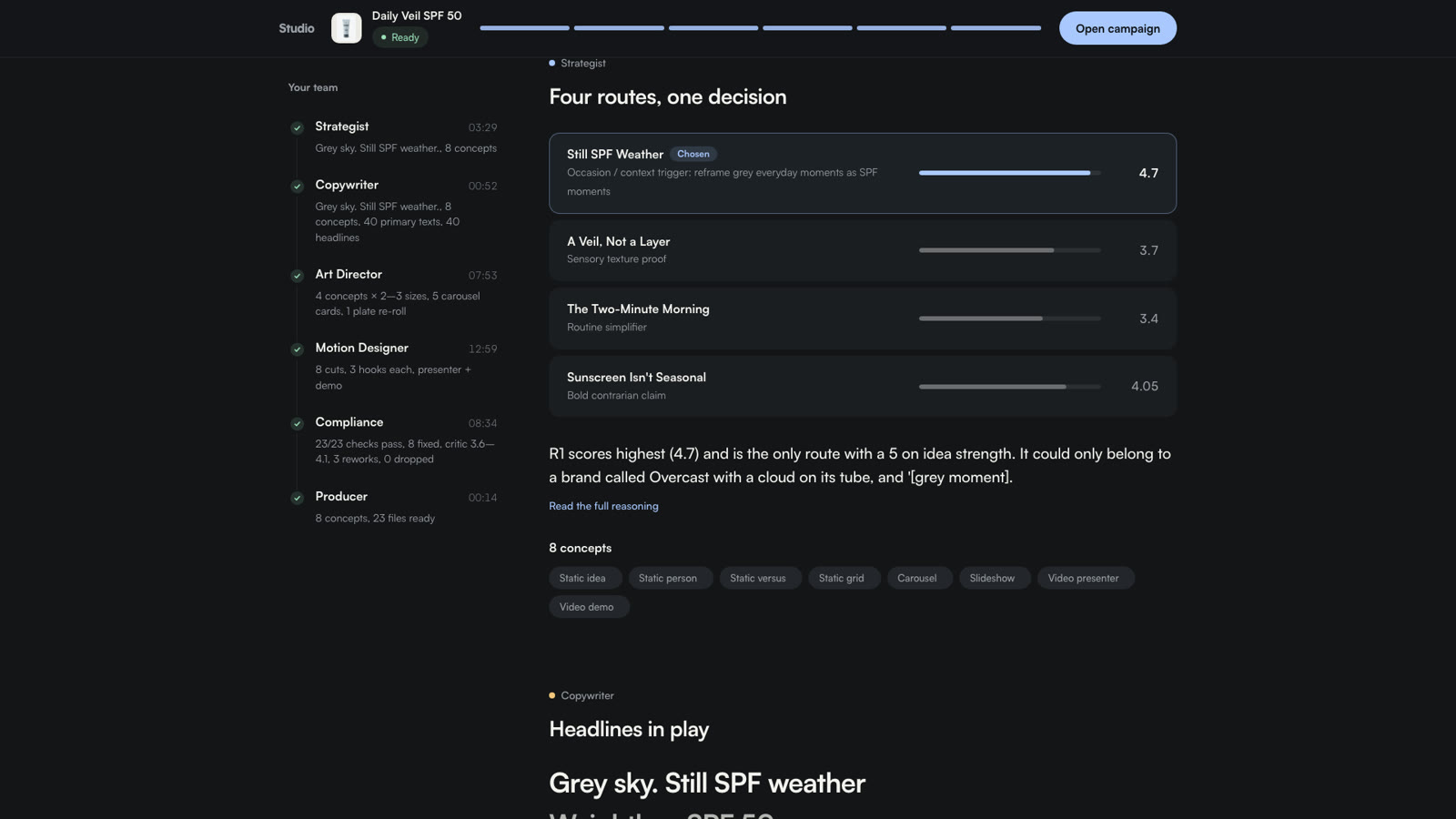
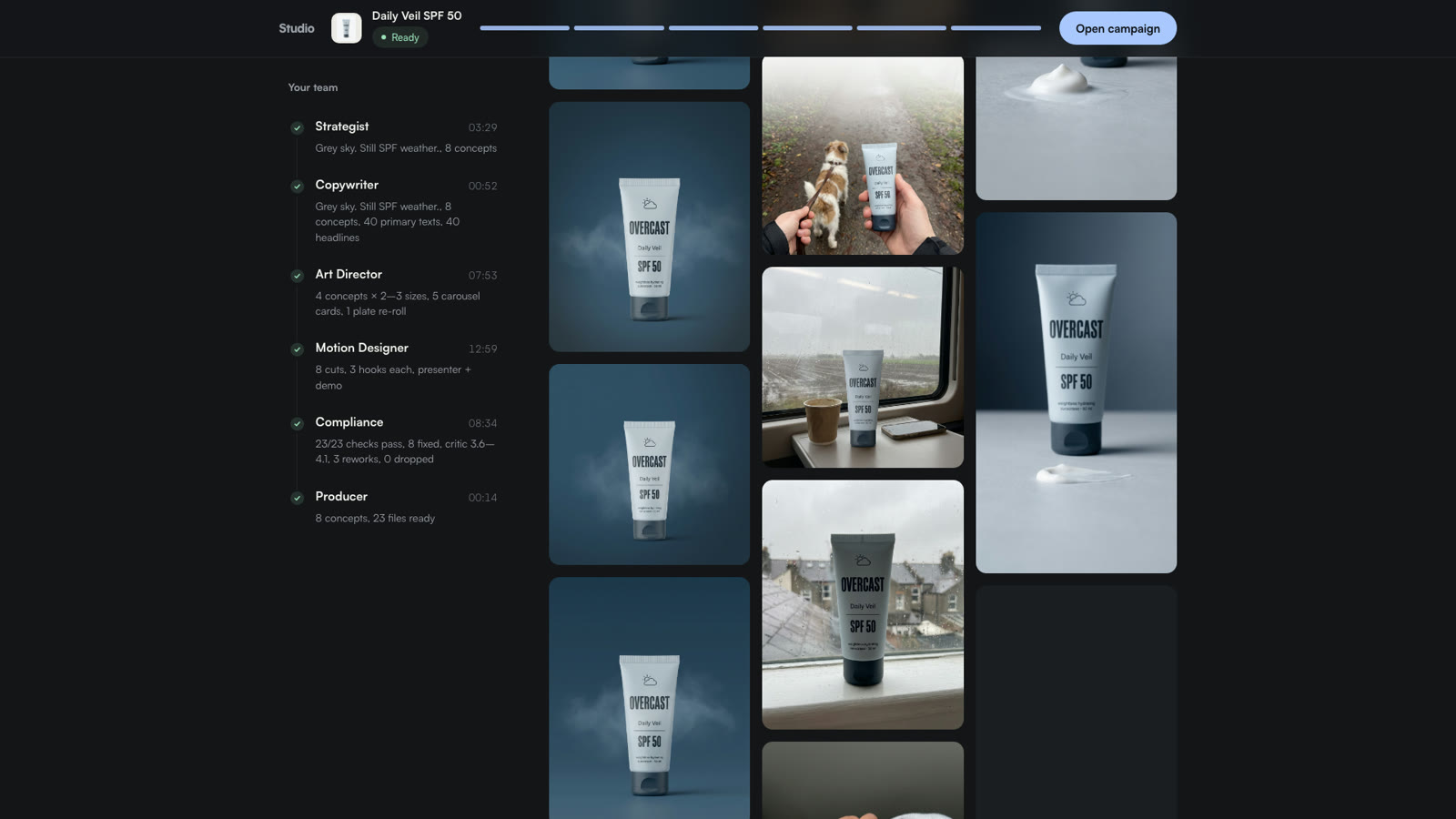

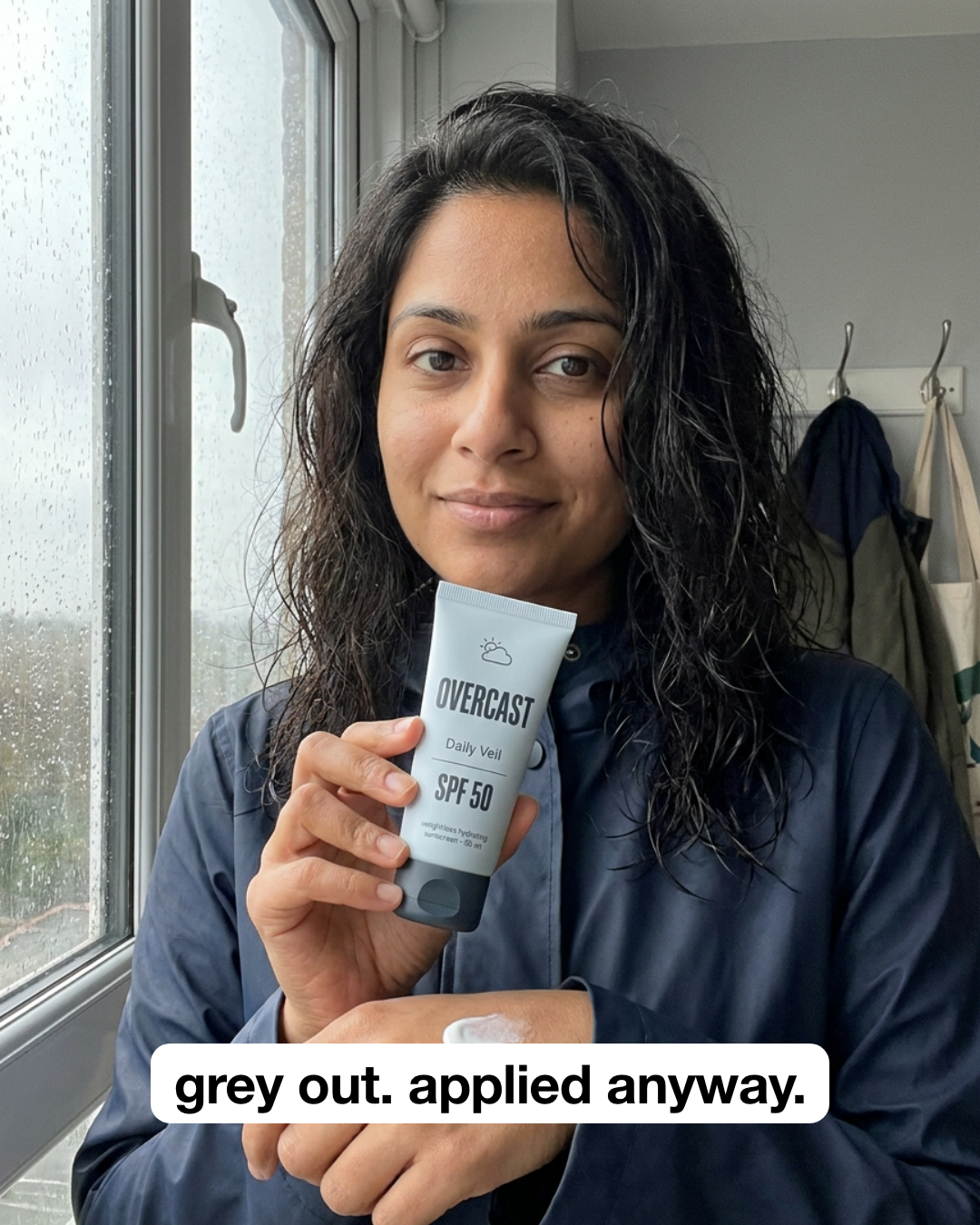
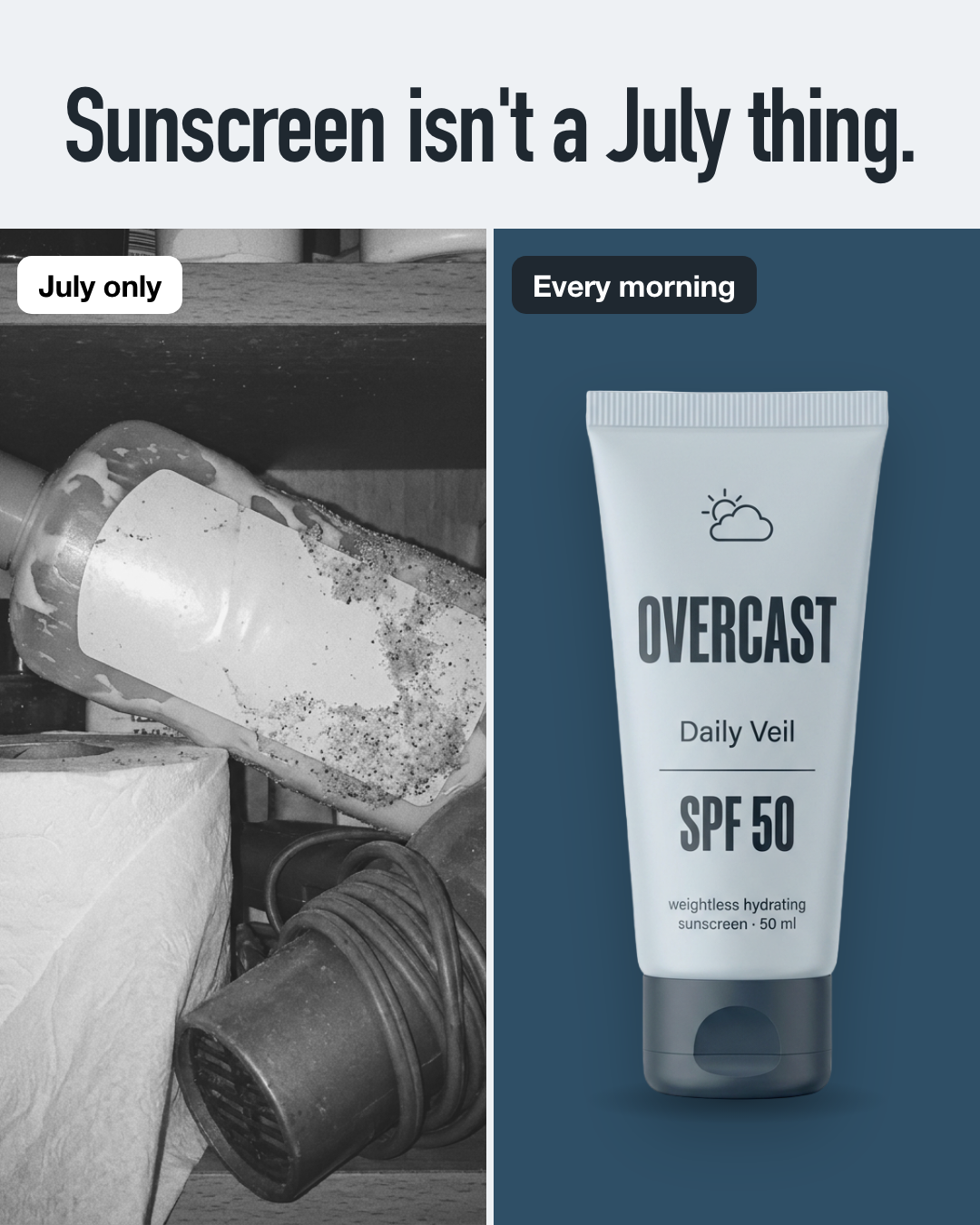
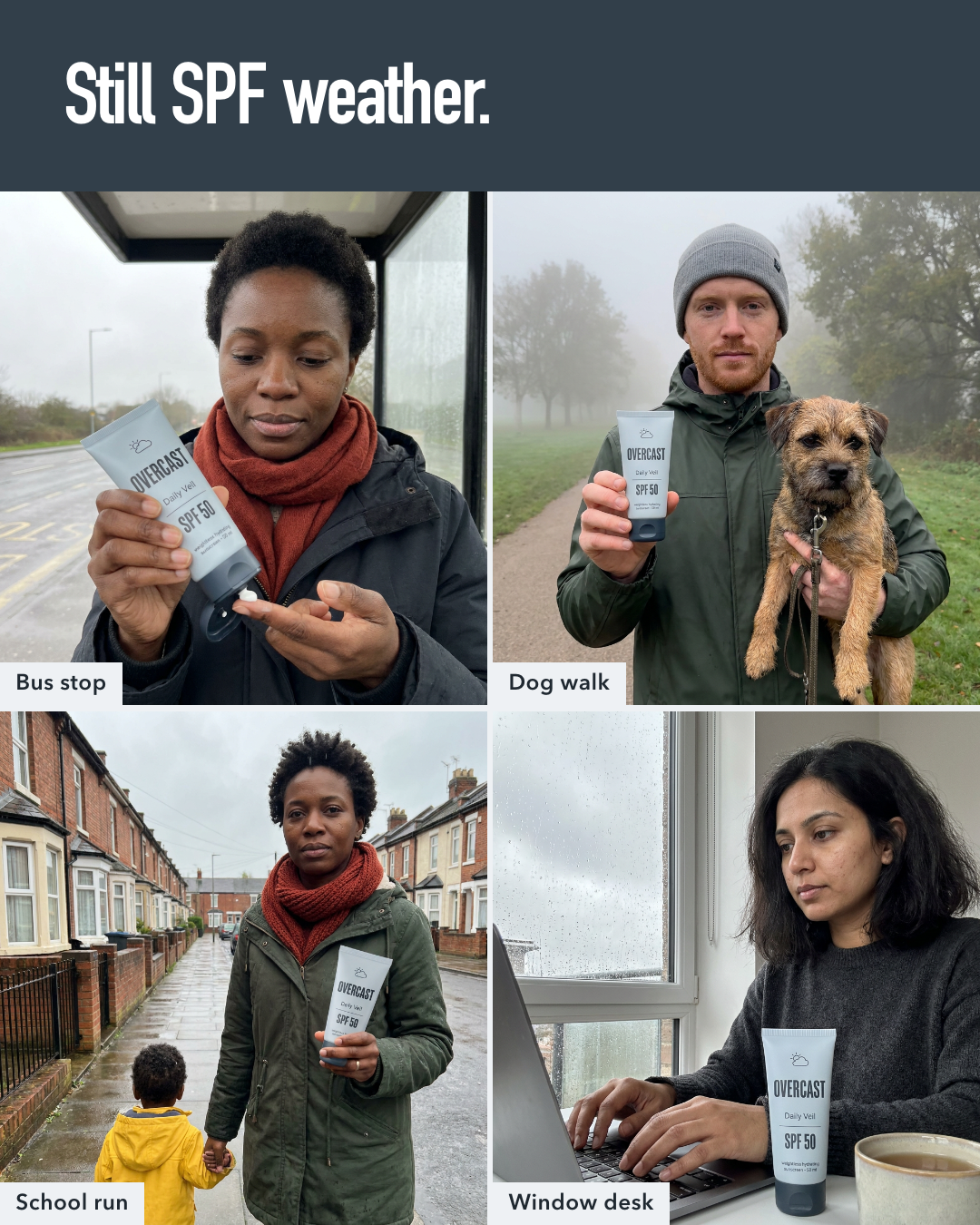
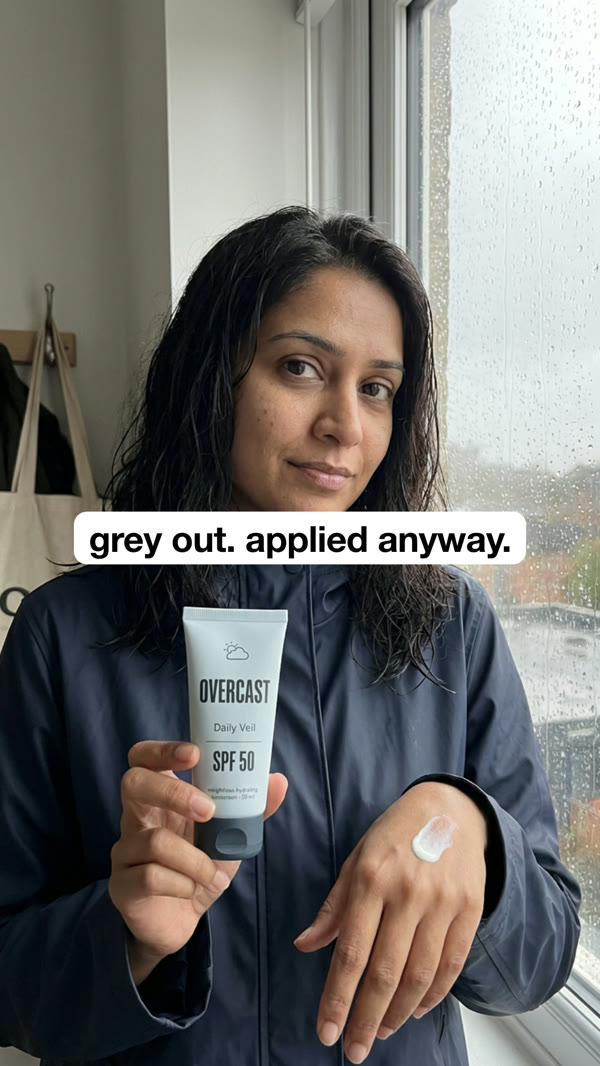
Screens from our own build on a fictional demo account. Every recommendation is approved by a person before anything changes.
What you get.
- A senior strategist with big-agency creative experience
- An angle matrix built from your customers’ own words
- A weekly batch of concepts, statics and scripts
- Briefs your designers and UGC creators can follow
- A learnings log your team keeps
- Everything we make is yours
What we won’t do.
- Ship AI-generated work without a person reviewing it
- Make claims you can’t substantiate, or invent testimonials
- Judge an ad on a day or two of numbers
- Copy competitors’ ads
Questions buyers ask.
Do you produce the content or just brief it?
Both. We produce statics, carousels and simple video edits, write scripts and briefs for your creators or ours, and brief larger shoots to production partners.
How many assets a month?
Most accounts start with about 10 live ads and add one or two genuinely new ones a week, more as spend grows.
Can we use our existing UGC?
Yes. We often start by re-cutting existing footage with new hooks and first frames before commissioning more.
How do you know a creative won?
Agreed rules: about a week and enough spend to judge, then cost per sale against target, with hook and hold rates explaining why. We don’t switch off ads that are carrying the spend.
See a free ad set first.
Email one product photo and we’ll send back a complete set of Meta ad concepts, free. Then decide whether to talk.
Email us to start ↗Creative retainers quoted to your volume, rolling monthly. · hello@adsandagents.com · UK-based, working with clients in the UK, Europe and North America.
Related.
Notes and sources
- Meta: about Advantage+ sales campaigns (creative variety)
- Meta: A/B testing best practices
- Dara Denney, “How Caraway Makes 1000s of Ads With No Agencies”, YouTube, 6 Nov 2025
- Dara Denney, “The 5 Levels of Creative Diversity”, YouTube, 18 Dec 2025
- Ben Heath, “Copy This Meta Ads Testing Strategy for Better Results”, YouTube, 3 Mar 2026
- Ben Heath, “The Truth About Meta’s Andromeda Update”, YouTube, 11 Nov 2025
Official Meta and Google guidance is the baseline. Practitioner views are named with the video and date; vendor and industry figures are their own claims. Demo brands and data in the films are fictional.